

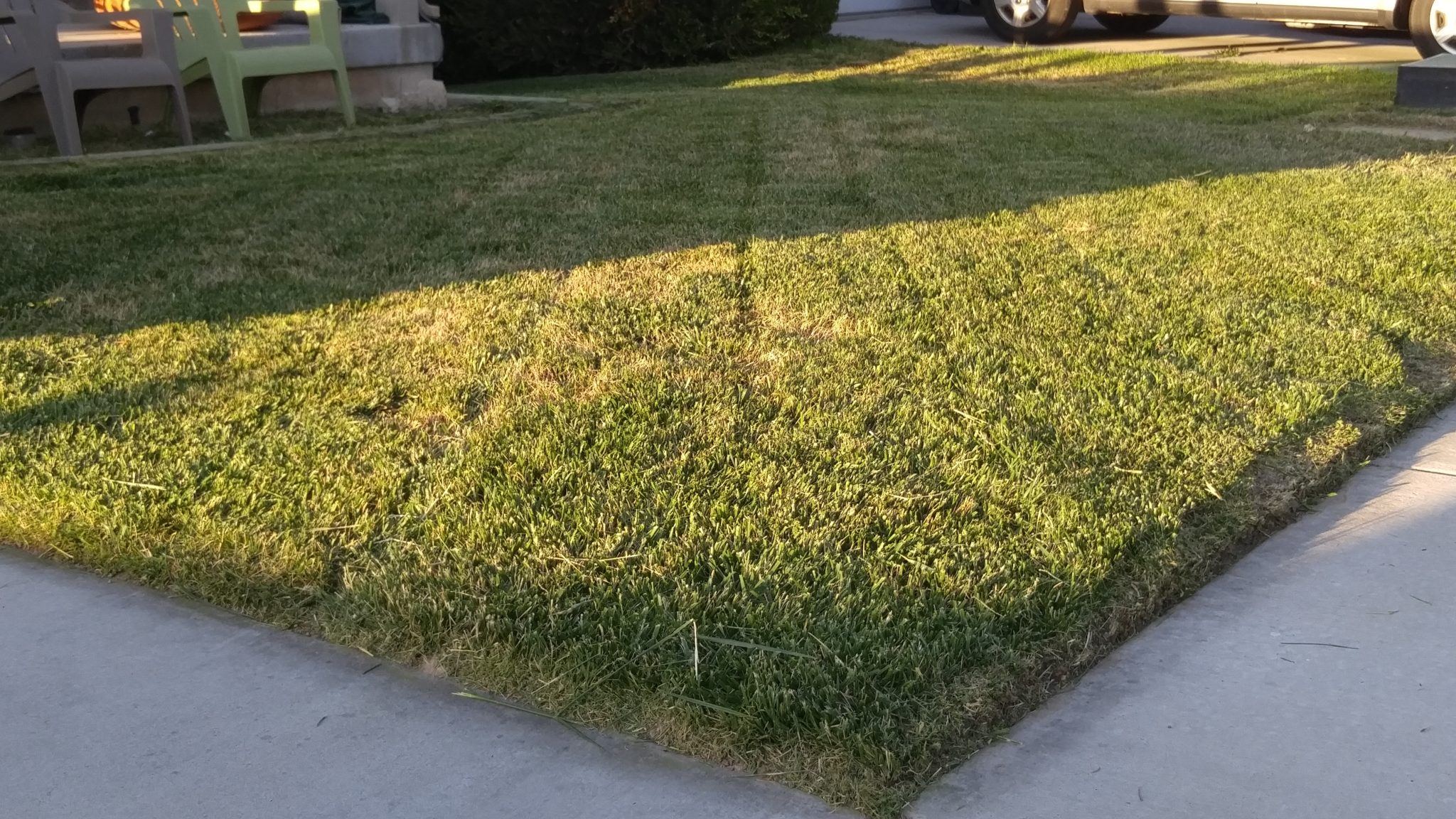
Utah County continues to experience some of the fastest residential growth in the country. New neighborhoods in Saratoga Springs, Eagle Mountain, Lehi, and American Fork are expanding rapidly, and every year thousands of new lawns are installed in newly constructed homes. Many of these lawns look excellent in spring — thick, green, and full of promise. By mid-July, some begin to struggle. By August, a meaningful number have become thin, patchy, or uneven despite the homeowner’s best efforts and sincere attention to watering.
First-summer failure is common enough that our team sees it consistently across service areas. The causes are almost always the same, and almost all of them are preventable with the right information from the beginning.
Mistake #1 – Watering Too Frequently Without Transitioning to a Deep-Root Schedule
New sod has an urgent hydration need immediately after installation. The root mat is shallow — often just one to two inches deep — and the turf depends entirely on consistent surface irrigation to survive the first few weeks. For this reason, new lawns are typically watered multiple times per day in the first 10–14 days.
The problem is that many homeowners never transition out of this high-frequency schedule. As sod begins to root into the native soil beneath, the irrigation program should gradually evolve — fewer cycles per day, longer runtimes, eventually fewer days per week — to encourage roots to grow deeper into the soil profile. Maintaining constant high-frequency, shallow irrigation trains roots to stay near the surface because moisture is always available there.
By mid-summer, a lawn watered three times daily from installation day is often still on that same schedule. The roots have never needed to grow deeper because surface moisture was always replenished. When peak July heat increases evapotranspiration demand significantly, there’s no deep root reserve to draw from. Our Sprinkler Services team can help you program a controller schedule that transitions appropriately as your lawn matures — reducing frequency and increasing depth gradually so the root system develops the way it should.
Mistake #2 – Poor or Unverified Sprinkler Coverage
New developments often mean new irrigation systems, but new doesn’t automatically mean properly calibrated. Many systems in new construction are installed to meet minimum coverage specifications but haven’t been field-verified under actual operating conditions. Head-to-head coverage — where each sprinkler head’s spray reaches the adjacent head — is the standard for adequate coverage, but gaps are common in practice.
Dry spots in corners, zones where heads are blocked by landscape boulders or fresh plantings, areas where water pressure is insufficient to achieve full spray radius — these issues become glaringly visible during the first hot summer and are frequently misread as irrigation frequency problems. Before assuming you simply need to water more, have your system checked for coverage gaps.
A well-calibrated system with complete coverage will consistently outperform a poorly-adjusted system running at higher frequency. Watch for patterns in your dry spots: if the same corners or edges consistently brown out first regardless of your schedule, it’s almost certainly a coverage problem rather than a runtime problem. Our Sprinkler Services team performs comprehensive coverage audits and makes the adjustments needed to ensure every part of your lawn receives consistent, uniform irrigation.
Mistake #3 – Mowing Too Early or Cutting Too Short
New turf is fragile in ways that aren’t always obvious. Many homeowners are eager to see their lawn looking neat and begin mowing as soon as the grass reaches a reasonable length. While it’s important not to let grass become severely overgrown, mowing too early — before sod has rooted into the underlying soil — can cause significant damage.
When you walk on or mow a lawn that hasn’t fully rooted, the mechanical action can break the delicate new root connections forming between the sod mat and native soil. Beyond timing, cutting grass too short removes the leaf surface area the plant needs to photosynthesize and fuel root development. New lawns should be maintained at the high end of their recommended height range for the first full growing season.
Additionally, make sure mowing is done carefully on slopes or areas where sod sections haven’t yet fully knit together. Mower wheels can displace or tear partially-rooted sections, creating gaps that brown out and invite weed pressure. Our Lawn Mowing Services team has experience managing new lawn care through the critical establishment window — a service that removes significant risk from the process.
Compacted Construction Soil — The Hidden Challenge
Perhaps the most underappreciated challenge facing new Utah County lawns is what’s beneath the sod. New construction sites are subjected to months of heavy equipment traffic, grading, fill work, and compaction. The existing topsoil is frequently stripped, mixed with subsoil, or buried under fill. What remains at the surface is often a dense, compacted base with poor drainage, limited organic matter, and minimal biological activity.
Sod installed on severely compacted soil is essentially being asked to root into a surface that behaves more like concrete than soil. Roots struggle to penetrate the dense layer and remain shallow and stressed through summer. During heat waves, these shallow-rooted lawns decline quickly and recover slowly — often in ways that homeowners attribute to watering problems when the real issue is a soil structure problem.
Annual Aeration Services are the most accessible long-term solution for construction compaction. Core aeration creates channels for root growth, improves water infiltration, and introduces air into the soil profile. For severely compacted new developments, starting an annual aeration program in the lawn’s first fall sets it up for dramatically better establishment and long-term health.
Pairing aeration with our Fertilization Services helps new lawns develop stronger root systems and recover from the stress of construction-altered soils. Starter fertilizers applied at installation support early root development, while a properly timed fertility program through the first growing season ensures the turf has the nutrients needed to establish well.
Signs a New Lawn Needs Professional Attention
Persistent footprints that remain visible in the turf long after you’ve walked across it indicate poor root establishment and potential compaction — healthy, well-rooted turf springs back quickly. Uneven color with vivid green in some sod sections and yellowing or browning in others often points to inconsistent rooting or coverage gaps. Thin growth and lack of lateral spread after 60–90 days suggests the turf is struggling to establish. Dry patches that persist despite irrigation indicate either coverage problems or compacted soil preventing water infiltration.
FAQ
Q: How long does sod take to fully establish in Utah County?
A: Initial rooting — where sod anchors to the native soil surface — typically takes 2–4 weeks under good conditions. Full establishment, where roots grow deeply into the native soil and the lawn can be managed like a mature turf, generally requires a full growing season. Heat stress, compacted soil, improper irrigation transitions, or mowing too aggressively can all extend this timeline significantly.
Q: Should I fertilize a new sod lawn right away?
A: Light starter fertilizer at or shortly after installation supports early root development by providing phosphorus that promotes root growth. However, heavy nitrogen applications on new turf push above-ground growth at the expense of root development and can burn shallow, sensitive new roots. Our Fertilization Services team can recommend the right application timing and product based on your soil conditions and installation date.
Q: My new lawn has dry spots in the same areas every time. What’s causing that?
A: Recurring dry spots in consistent locations almost always indicate a sprinkler coverage or distribution problem rather than an overall watering schedule issue. Check whether the heads serving that area are achieving full spray radius, whether any heads are tilted, clogged, or blocked by landscape features, and whether the pressure in that zone is adequate. A coverage audit from our Sprinkler Services team can diagnose and resolve the issue efficiently — often in a single visit.
Q: Is it normal for new sod to look uneven in color?
A: Some variation in color is normal immediately after installation as sod adjusts to new soil conditions and recovers from transport stress. However, persistent uneven color after the first 2–3 weeks — particularly sections that remain yellow or brown despite adequate irrigation — warrants closer investigation. Check for coverage gaps, areas where sod hasn’t knit together and is drying at the seams, and whether the discolored sections lift away easily, which would suggest rooting failure.
Q: Can I overseed thin areas of a new lawn in summer?
A: Summer is generally a challenging time for seeding cool-season grasses like Kentucky bluegrass because germination requires consistent moisture and moderate temperatures. High summer heat increases the difficulty of keeping the seed bed moist enough for germination without overwatering adjacent sod. Fall — specifically late August through September in Utah County — is the ideal window for overseeding thin areas, as cooling temperatures support germination and the turf has a full fall and spring to establish before the next summer. Contact Us to plan a fall overseeding program.
Q: How do I know if my soil is too compacted for good lawn establishment?
A: A simple test is the screwdriver test: push a standard screwdriver into the soil by hand. In healthy, adequately aerated soil, it should penetrate 6 inches without significant resistance. If you can’t push it in more than 2–3 inches, the soil is likely too compacted for good root development. A professional soil assessment can also identify compaction depth and recommend the most appropriate remediation approach for your specific conditions.
Contact Us to schedule a new lawn evaluation or to develop a first-season care program for your property.
Areas We Serve: Saratoga Springs, Eagle Mountain, Lehi, American Fork, Pleasant Grove, Orem, Provo and surrounding areas.