

Introduction: The One Mistake Utah Homeowners Regret Every Spring
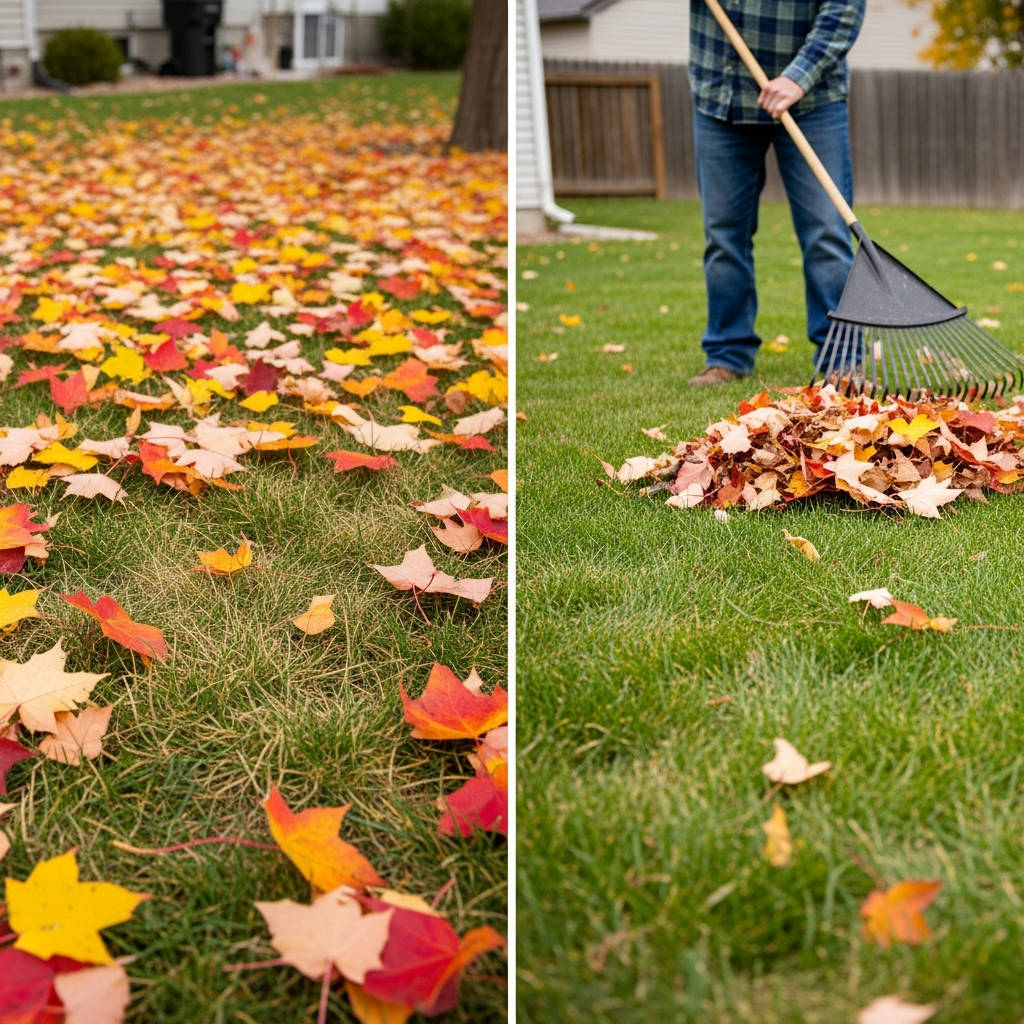
If you drive through any Utah neighborhood in October, you’ll notice a big difference from yard to yard. Some lawns are still green and tidy, while others disappear under a growing blanket of leaves.
Most homeowners tell themselves:
“I’ll clean it up before the snow hits.”
“I’ll get to it next weekend.”
“It’s not hurting anything yet.”
But here’s the truth:
Skipping fall leaf cleanup is the fastest way to destroy a healthy lawn in Utah — and the damage doesn’t show up until it’s too late.
Every spring, homeowners across Utah wonder why their yards look thin, patchy, or dead in certain areas. They assume they need more fertilizer or a better mower. But for most lawns, the real issue started months earlier when leaves were left sitting through fall and winter.
This is the regret no one warns new homeowners about — until it hits them.
Why Utah Lawns Are Especially Vulnerable
Not all states deal with the same kind of fall and winter dynamics Utah does. Our lawns face a unique combination of:
- Freeze–thaw cycles
- Dry air mixed with dense early moisture
- Cold nights even in early fall
- Heavy leaf drop within a short period
- Snow that arrives quickly and stays
These conditions make leaves more dangerous to Utah lawns than in many other states.
Leaves don’t just “sit” on the lawn here.
They smother, soak, freeze, and rot — all before the grass has finished preparing for winter.
The Domino Effect: How Skipping Fall Leaf Cleanup Kills Your Grass
❌ 1. Leaves block sunlight when Utah grass needs it most
Fall is when grass builds the nutrients it needs to survive winter and green up in spring. When leaves block that sunlight, your grass goes into winter weak.
Weak grass entering winter = dead grass in spring.
❌ 2. Leaves trap moisture (the perfect disease incubator)
Leaves hold moisture, especially after:
- morning frost
- early Uah snow
- sprinkler overspray (if blowouts aren’t done yet)
- cold fall rain
This creates humid, dark conditions near the soil surface — exactly where fungal diseases thrive.
The biggest culprit?
👉 Snow mold, the lawn-killing disease most Utah homeowners discover only after the snow melts.
❌ 3. Leaves suffocate the lawn
When leaves pile up and get wet, they compress into a dense mat. That mat:
- blocks airflow
- blocks water movement
- prevents oxygen from reaching the roots
Grass cannot breathe. Grass cannot grow. Grass cannot store nutrients.
Suffocation doesn’t kill the lawn instantly — it kills it slowly and silently through the winter.
❌ 4. Leaves become pest habitat
Voles, spiders, slugs, and even grubs use leaf piles as insulated shelter. Utah’s cold nights encourage pests to burrow into leaf debris.
By spring, they have destroyed:
- roots
- crowns
- new shoots
- turf density
Which is why some homeowners wake up to tunnel marks and dead trails across the yard.
❌ 5. Leaves freeze into turf-killing ice mats
This is the single most devastating problem in Utah.
Here’s what happens:
- Leaves get wet
- Temperatures drop at night
- Leaves freeze into a crust
- This crust compresses the grass and crowns beneath
- Grass dies in perfectly leaf-shaped patches
These frozen mats don’t melt evenly, so the damage continues for weeks.
What Utah Homeowners See in Spring After Skipping Fall Cleanup
Most people don’t realize their fall neglect caused their spring lawn problems until the snow melts.
Here’s what you’re likely to see:
- Circular or patchy dead spots
- Matted, slimy, or pale grass
- Gray or pink snow mold circles
- Uneven green-up
- Thin areas with almost no new blade growth
- Vole tunnels or paths
These problems don’t fix themselves. Most require:
- reseeding
- aeration
- dethatching
- fertilizing
- pest remediation
…all of which cost more than simply cleaning leaves in fall.
Why Utah’s Climate Makes Fall Leaf Cleanup Non-Negotiable
In warmer states, leaves break down slowly over time. In Utah, they become a biological hazard for lawns.
Here’s why:
Utah’s freeze–thaw cycles
Mild days + freezing nights = repeated freezing of wet leaf mats.
Utah’s clay soil
Clay holds moisture longer, increasing mold risk.
Utah’s altitude
Higher elevation means colder nights earlier in fall.
Utah’s early freeze dates
Many areas freeze before homeowners even schedule cleanup.
This combination creates the perfect storm for lawn damage from leaves — which is why leaving your lawn unserviced in fall is so destructive.
The Right Way to Do Fall Yard Maintenance in Utah
You don’t need expensive equipment. You don’t need special training.
You just need consistency.
✔ Weekly leaf removal
Don’t wait until every leaf falls.
Clean weekly — especially in October and November.
✔ Keep grass at 2–2.5 inches for the final mow
Short grass mats less under snow.
✔ Remove debris from corners and fence lines
These are disease incubation zones.
✔ Aerate in fall
Opens the soil so roots can breathe before winter.
✔ Winter fertilizer
Helps the grass store energy for spring.
✔ Sprinkler blowout
Prevents water from freezing in the irrigation system.
This routine gives your lawn a competitive advantage that adds up fast.
Protect Your Lawn Before Winter Hits
Your spring lawn is already being shaped — right now, in fall.
Don’t wait until the damage is done.
Let Saratoga Mowing handle:
🍁 Fall Cleanup
🍁 Leaf Removal
🍁 Aeration
🍁 Winter Fertilizer
🍁 Sprinkler Blowouts
📞 Call (801) 810-5452
🌐 Or schedule online at SaratogaMowing.com
FAQ — Fall Leaf Cleanup Utah
Q1: Does skipping fall cleanup for one year really matter?
Yes. Even a single neglected fall can cause long-term thinning and dead patches.
Q2: Can I mulch leaves instead of removing them?
Only if the layer is thin and dry. Thick, wet, or dense leaves must always be removed.
Q3: What month is leaf cleanup most important in Utah?
Late October through mid-November — the critical danger window before snowfall.Q4: Is it okay to wait until all leaves fall?
No. Moisture and frost make thick leaf cleanup much harder and more damaging.