

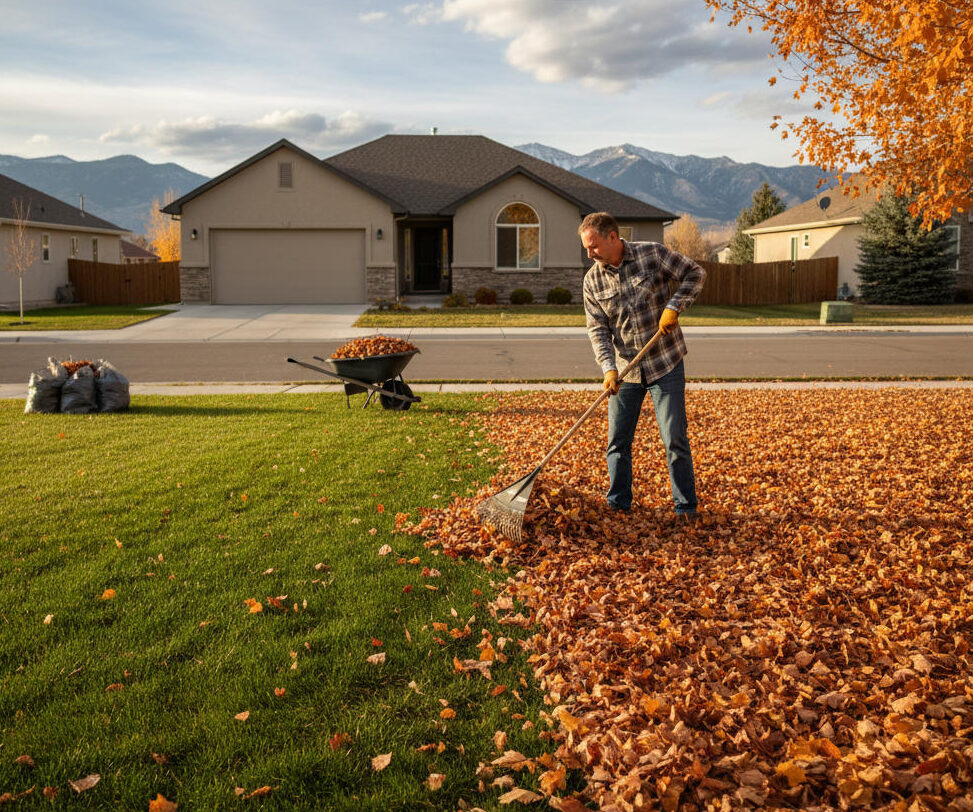
Introduction: The Utah Spring Lawn Glow-Up Starts Now
Every spring in Utah, the same story plays out. Snow melts, temperatures warm up, and suddenly a few lawns in the neighborhood turn green first. They look thicker, fuller, and healthier.
Most homeowners assume those yards belong to people who spend a fortune on premium fertilizers or fancy lawn services. In reality, the difference usually comes down to something much simpler.
Most of the time:
They did not skip fall lawn prep.
There is one core habit, done consistently in fall, that gives your grass a huge head start when spring arrives. It is not complicated, it does not require special equipment, and it is something almost any homeowner in Utah can do.
Let’s walk through that habit, why it matters so much in our climate, and how to put it into action so your lawn can be the one turning heads when everything greens up again.
The Fall Habit That Changes Everything: Clearing Leaves Early
The secret is simple:
Clear your leaves early, thoroughly, and consistently.
That is it. Not glamorous, but incredibly effective.
In Utah, the main cause of unhealthy spring lawns is not the cold itself, it is what happens to your grass before and during winter when leaves, debris, and thatch are left on the surface.
When you keep up with leaf removal during fall, you protect your grass in five powerful ways that pay off months later.
How Leaves Destroy Spring Lawns in Utah
When leaves sit too long on grass, especially in Utah’s freeze–thaw climate, several damaging things happen at the same time.
1. Leaves Block Sunlight
Grass does not stop working in fall. It uses this cooler season to store energy, repair summer damage, and build deeper roots. To do that, it still needs sunlight.
When leaves cover the lawn, they create a barrier that stops light from reaching the blades. The grass slowly weakens because it cannot photosynthesize effectively. By the time winter hits, the turf is already stressed.
2. Leaves Trap Moisture
Utah is dry, but fall can still bring rain, early snow, and sprinkler cycles if systems are not shut down yet. When leaves blanket the lawn, they hold on to that moisture, especially overnight.
Moisture plus shade equals the perfect environment for lawn diseases. That damp, trapped layer becomes a breeding ground for fungi, including snow mold and other cold-season issues that linger into spring.
3. Thick Leaf Mats Suffocate Grass
When leaves pile up and get wet, they mat together. This dense layer blocks air from getting down into the soil and stops water from moving properly.
Roots need oxygen. Without airflow, the soil environment shifts, and microbes that support healthy turf are replaced by those that contribute to decay. Grass suffocates slowly under that matted layer, and you see the result in spring as thin, weak, or dead patches.
4. Leaf Piles Invite Pests
Leaf piles are a nice winter condo for pests. Voles, grubs, slugs, and insects use them as shelter from temperature swings and predators.
By spring, these pests are already in position, right in your lawn’s root zone. They start feeding on tender roots and shoots at exactly the moment your grass is trying to wake back up. That is a big reason some lawns come out of winter with mysterious bare spots or chewed, shallow-rooted turf.
5. Leaves Freeze Into Mats That Kill Turf
In Utah, we get cycles where daytime temperatures warm just enough to melt surface moisture, then drop below freezing at night. Wet leaves on the lawn freeze into stiff, crusty layers.
That frozen mat presses down on the grass, breaks crowns, and can literally crush the life out of the turf underneath. By spring, those areas show up as solid, dead patches that need to be overseeded or resodded.
This is why the best fall cleanup routines in Utah almost always lead to the best spring lawns. It is cause and effect.
The Science Behind Spring Lawn Health Utah Homeowners Do Not See
Above ground, your lawn looks quiet in fall. Below the surface, a lot is happening.
During fall, grass in Utah is:
- Building root strength: Cooler temperatures and adequate moisture help roots grow deeper.
- Storing carbohydrates: Grass creates and stores energy it will use to green up in spring.
- Repairing summer stress: Heat, foot traffic, and drought leave microscopic damage that gets repaired in fall.
- Thickening the crown: The plant prepares multiple growing points that will become next year’s blades.
Leaves and debris interrupt every single one of those processes.
When you allow a clean, open environment around the turf in fall, you are essentially giving your lawn a quiet, ideal recovery season. It can breathe, absorb nutrients, and prepare for the next growing cycle instead of fighting disease and suffocation.
That is why lawns that get consistent fall leaf cleanup come back thicker, greener, and healthier when spring arrives. You are not just cleaning up the yard, you are shaping how your lawn will look months from now.
The Perfect Fall Lawn Prep Routine For Utah Yards
Here is the exact fall lawn prep routine professionals use across Utah County. You can treat this as your fall lawn prep checklist and adapt it to your schedule.
Step 1: Remove All Leaves Weekly
Do not wait until every leaf has fallen. In Utah, wind and early moisture can turn a few days of leaf drop into a soggy mess.
Make it a habit to:
- Rake or blow leaves once a week.
- Pay extra attention to shady areas and low spots.
- Clear leaves that collect along fences, curbs, and around trees.
No leaf mats means no smothering and a much lower risk of snow mold.
Step 2: Mow to 2–2.5 Inches
As you move deeper into fall, gradually lower your mowing height. Aim for a final cut of around 2 to 2.5 inches.
Shorter grass:
- Is less likely to mat down under snow.
- Dries faster after moisture.
- Provides less shelter for pests and voles.
Avoid cutting more than one third of the blade height at a time, even in fall. A gradual reduction over several mows is easier on the lawn.
Step 3: Aerate Compacted Soil
Many Utah lawns sit on clay-heavy or compacted soil, especially in newer developments. Over the season, traffic, irrigation, and settling squeeze the soil tight.
Core aeration in fall:
- Opens up channels for air and water.
- Helps roots grow deeper.
- Prevents standing water and freeze-related damage.
- Improves fertilizer penetration.
If your lawn puddles easily or feels hard underfoot, fall aeration is one of the best investments you can make in long term spring lawn health.
Step 4: Apply a Winterizer Fertilizer
Fall is the most important feeding of the year in our climate. While the top growth is slowing down, roots are still very active.
Use a quality winterizer fertilizer with:
- Lower nitrogen to avoid forcing tender top growth.
- Higher potassium to support root strength and disease resistance.
This helps your lawn:
- Store more energy.
- Withstand cold and dry conditions.
- Green up faster and more evenly next spring.
Step 5: Clear Debris, Thatch, and Dead Growth
Beyond leaves, clean up:
- Dead annuals and plant material.
- Broken branches and twigs.
- Excess thatch in problem areas.
This eliminates hiding spots for pests and removes extra material that can trap moisture. Think of it as decluttering your lawn so only the healthy turf remains, ready for winter. By the time Utah’s winter settles in, this simple routine gives your lawn a 60 to 90 day advantage before spring temperatures rise. While neglected yards are trying to recover from damage, your turf will already be in “go” mode.
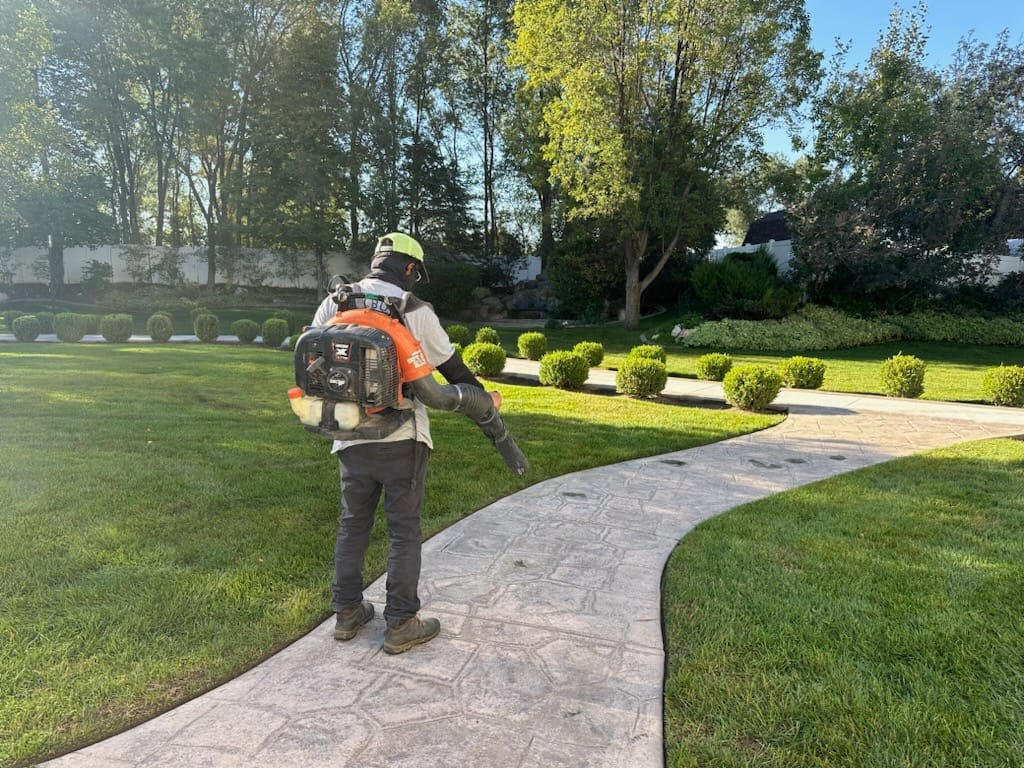
Give Your Spring Lawn a Head Start
Your lawn’s future is being decided in fall, not spring.
If you want a yard that turns green early, feels thick underfoot, and looks great from the street, the solution is simple. Give it the fall attention it deserves.
Let Saratoga Mowing handle your:
- Fall Cleanup
- Aeration
- Winterizer Application
- Sprinkler Blowout
So you can enjoy the results without spending your weekends buried in yard work.
Call (801) 810-5452
or
Book online at SaratogaMowing.com to lock in your fall services before the weather turns.
FAQ — Fall Lawn Prep Utah Homeowners Ask
Q1: When should I start fall cleanup in Utah?
Late September through mid October is ideal for most areas. Start when you see a noticeable layer of leaves building up, not when the lawn is completely buried.
Q2: Can I mulch my leaves instead of bagging them?
Yes, but only if the layer is thin and dry. Leaves should be shredded into small pieces so that grass is still clearly visible. Thick, wet layers should always be removed, not mulched.
Q3: Do I really need fertilizer in fall?
Yes. For spring lawn health in Utah, fall is the most important time to feed. Proper fall fertilization helps your lawn overwinter and bounce back fast.
Q4: Is aeration necessary every year?
In Utah County’s clay soils and high traffic yards, annual fall aeration is strongly recommended. If your soil is lighter or your lawn is low traffic, you may be able to aerate every other year, but once a year is ideal for most homes.
Q5: Is it bad to wait until right before snow to clean up?
Yes, because by then your lawn has already spent weeks or months under stress from leaf cover and trapped moisture. Earlier, consistent cleanup is far better.