

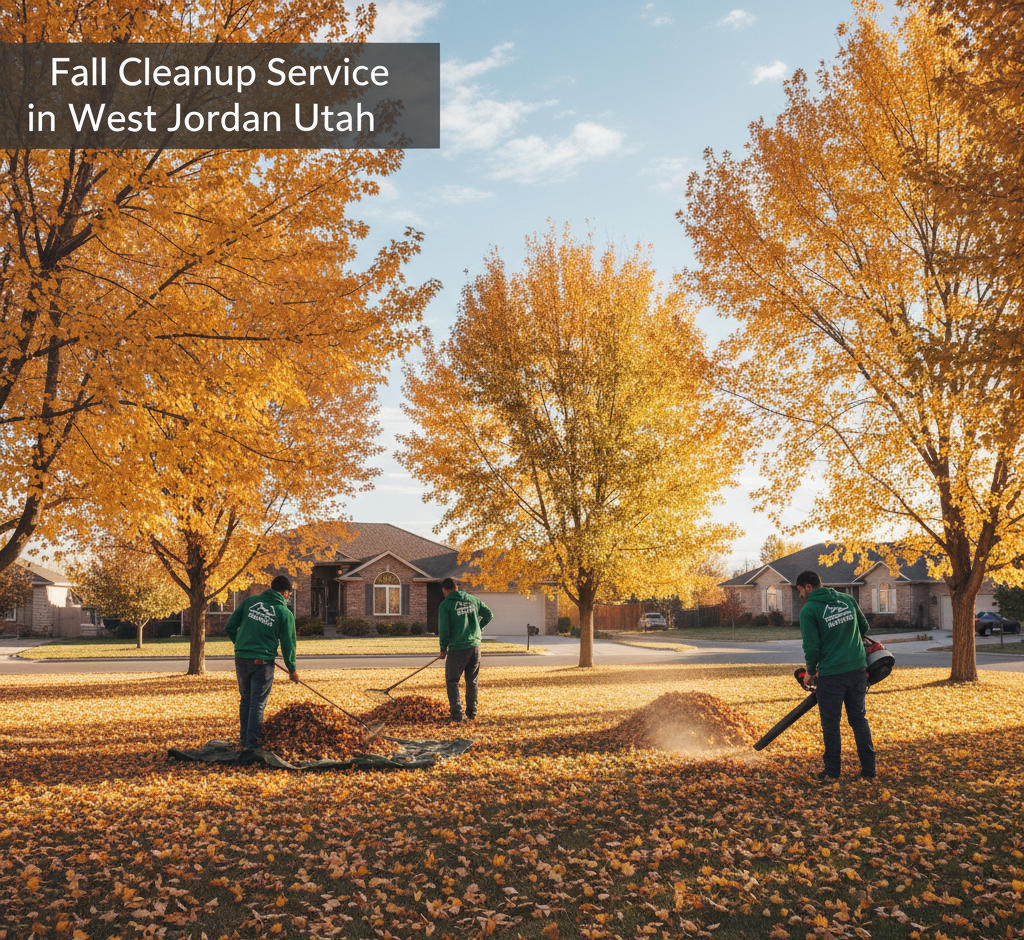
Introduction: What You Don’t See Can Hurt Your Lawn
From the curb, a blanket of fall leaves looks cozy — even beautiful. But underneath, a silent disaster is forming.
In West Jordan, where chilly nights meet dry, sunny days, that trapped layer of leaves becomes the perfect incubator for mold, pests, and dead turf.
Here are the five most expensive lawn problems you’ll face if you skip your fall cleanup this year — and how to avoid them with one simple weekend routine.
1. Smothering: Your Grass Is Suffocating
Leaves create a barrier that blocks sunlight, air, and nutrients from reaching your lawn.
Without airflow, grass begins to choke, turning pale and weak long before winter even arrives. By spring, smothered patches appear as dull, straw-colored areas that refuse to bounce back.
2. Disease Breeding Grounds
Trapped moisture under leaves is a dream come true for fungal diseases like:
- Snow Mold
- Brown Patch
- Dollar Spot
These fungi thrive in damp, shaded conditions and can spread quickly once the snow melts. If you notice matted gray or pink patches in March, your fall cleanup was skipped too long.
3. Pest & Insect Havens
Leaf litter shelters all kinds of unwanted guests — grubs, slugs, spiders, and voles.
When the weather warms up, these pests resurface hungry and ready to feast on your new grass shoots.
That’s why early fall leaf removal is one of the most effective forms of natural pest control.
4. Weak Turf That Won’t Recover
Even if your lawn looks fine now, leaves that block sunlight will weaken root systems. This makes grass more vulnerable to winter kill, frost damage, and poor regrowth.
Strong lawns need sunlight in fall to store energy for winter. Without it, they enter dormancy undernourished and emerge patchy come spring.
5. Frozen Moisture & Winter Damage
In West Jordan, where temperatures swing from 60° days to 25° nights, trapped moisture under leaves freezes fast.
Each freeze expands and contracts the soil, breaking grass crowns and compacting the turf. This “freeze stress” causes uneven, bumpy lawns and dead grass stripes in spring.
The 5-Step Fall Cleanup Plan That Fixes Everything
Step 1: Rake or blow leaves regularly — don’t wait until they mat.
Step 2: Mow your lawn short (around 2.5 inches).
Step 3: Use a mulching mower on thin, dry layers only.
Step 4: Remove all debris, branches, and dead annuals.
Step 5: Schedule professional cleanup before the first frost.
Follow these steps and your lawn will thank you in April.
Local Tip: West Jordan’s Climate Is Tricky
Our city’s high-desert elevation means unpredictable fall weather. Warm days accelerate leaf decay, while sudden cold snaps lock moisture in place.
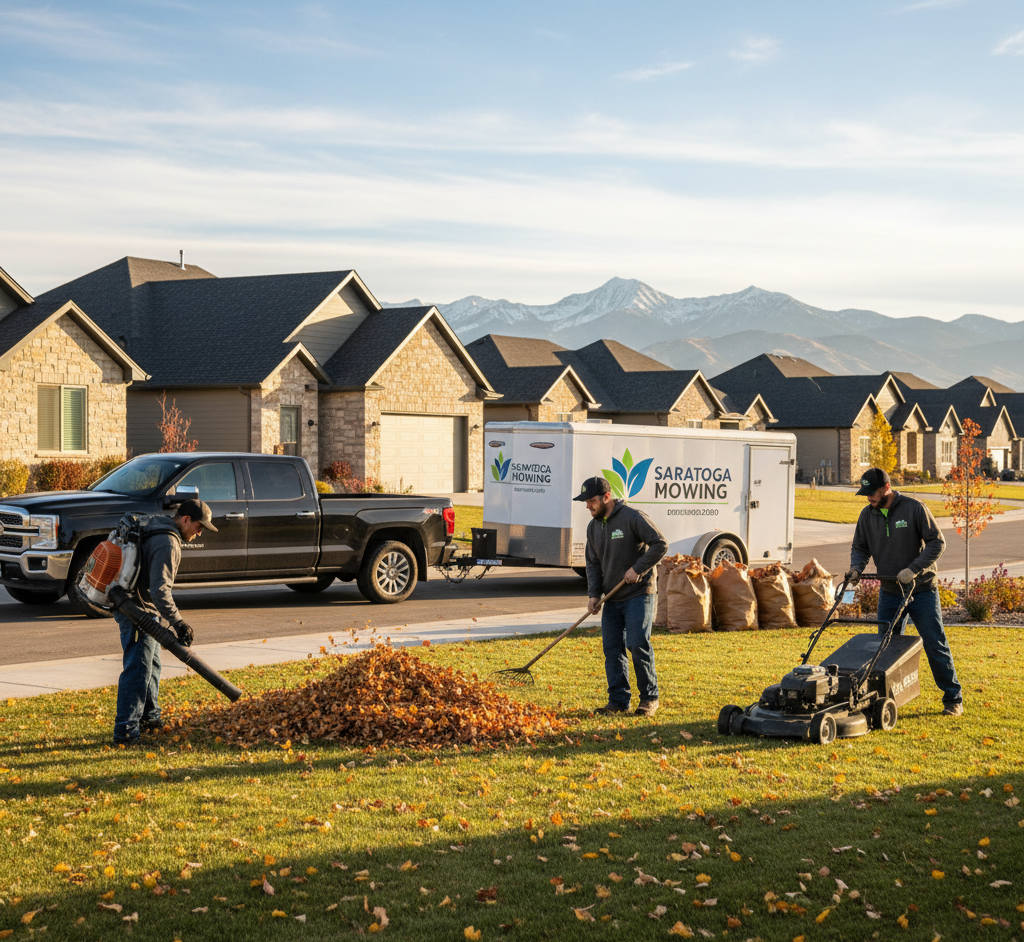
That’s why professional crews like Saratoga Mowing time their fall cleanups carefully — striking the perfect balance between airflow, hydration, and protection.
Call to Action: Prevent Spring Regret — Act Now
Don’t wait until snow buries the problem. The damage starts long before winter.
Let Saratoga Mowing handle your Fall Cleanup in West Jordan — raking, bagging, blowing, and prepping your lawn for winter the right way.
Call (801) 810-5452 or visit Saratoga Mowing Fall Services to book your service before frost hits.
Book by November 18 and get $25 OFF your cleanup package!
FAQ — Fall Cleanup in West Jordan, Utah
Q1: When should I do fall cleanup in West Jordan?
Aim for early to mid-October — before frost and after most leaves have fallen.
Q2: Can I just mulch my leaves instead?
Only if the layer is light and dry. Wet or thick piles should always be removed.
Q3: How short should I mow before winter?
Around 2–2.5 inches is ideal. Shorter grass prevents matting and snow mold.
Q4: What happens if I skip cleanup for one year?
Expect snow mold, pests, and brown patches by spring — plus more reseeding costs.