

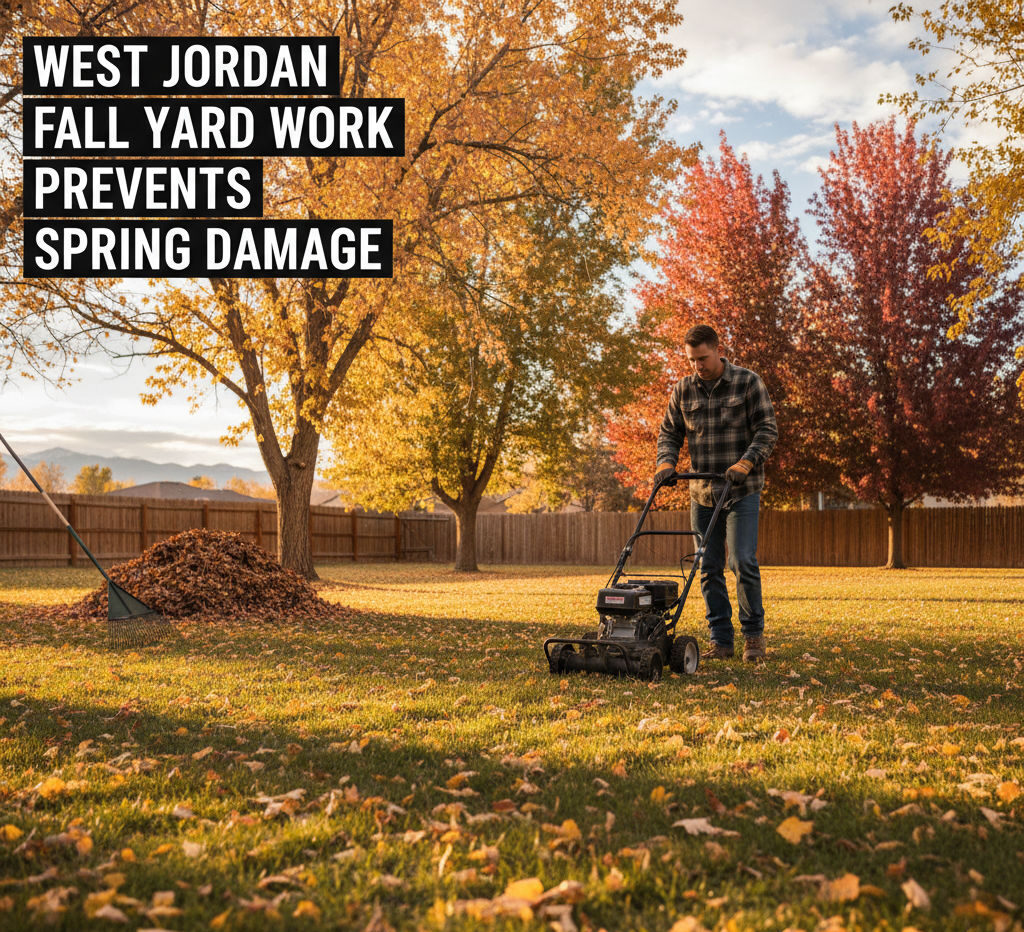
Introduction: The Mistake West Jordan Homeowners Don’t Realize They’re Making
Here’s a secret few homeowners in West Jordan realize until it’s too late:
Neglecting your yard in fall creates the exact problems you’ll spend spring trying to fix.
Those brown circles, matted grass, and unexpected pest swarms? They don’t just happen — they’re the result of skipped fall maintenance. The good news is that you can prevent all of it in just one weekend with some simple, strategic work.
If you’ve ever found yourself raking up soggy leaves in April, battling snow mold, or wondering why your lawn turned patchy after winter, this guide is for you. Let’s break down exactly how to stop these issues before they start — no landscaping degree required.
Why Fall Yard Work Matters So Much in Utah’s Climate
West Jordan sits right in the middle of Utah’s freeze-thaw zone, where fluctuating temperatures, dry air, and early snowfalls stress your lawn more than almost anywhere else.
During fall, lawns need help:
- The soil starts cooling, but roots are still growing.
- Daylight shortens, reducing photosynthesis.
- Moisture levels spike under piles of fallen leaves.
Without cleanup and preparation, these small imbalances become big headaches by spring — namely:
- Snow Mold: Fungus that kills grass under winter snow.
- Pests: Bugs overwintering in leaf litter and thatch.
- Brown Patches: Drought and freeze damage to unprotected roots.
A single weekend of focused effort can protect your lawn from all three.
Headache #1: Snow Mold — The Silent Lawn Killer
What It Is
Snow mold looks like flat, pale gray or pink circles on your lawn once the snow melts. It thrives in moisture trapped beneath leaves and long grass.
Why It Happens
When grass is too long, air circulation is blocked, and fungal spores multiply beneath snow cover.
How to Prevent It in West Jordan
- Do a Final Low Mow
Mow your grass shorter than usual (around 2–2.5 inches). This reduces matting. - Rake and Remove Leaves Promptly
Even a thin layer of leaves creates the perfect breeding ground for mold. - Dethatch and Aerate
Removing thatch (the layer of dead stems) and aerating allows air and nutrients to circulate. - Avoid High-Nitrogen Fertilizer
Late-season nitrogen pushes weak new growth, making your lawn more vulnerable. - Optional: Apply Fungicide
If your lawn has had snow mold before, a light fungicide treatment in late October can be worthwhile.
NLP tip to remember: “Short, dry, and clean” — that’s the mantra for mold-free grass all winter.
Headache #2: Fall Pests and Overwintering Bugs
Why They Appear
When you skip yard cleanup, you’re basically setting out a five-star winter hotel for insects. Leaf piles, mulch beds, and untrimmed plants give pests cozy shelter through the cold months.
What to Watch Out For in Utah Lawns
- Grubs: Feed on grass roots and cause spongy soil patches.
- Billbugs: Tiny beetles that chew grass crowns.
- Earwigs and spiders: Move indoors once outside debris freezes.
Your Weekend Pest-Prevention Plan
- Trim perennials and cut back dead stems.
- Clear mulch beds of heavy debris but keep protective coverage for roots.
- Inspect shrub bases and remove webbing or egg sacs.
- Apply pest control granules (optional) in infested areas before the first freeze.
Pro Tip: Use the opportunity to tidy the space between your foundation and lawn — that’s where most spring pests emerge.
By Sunday evening, your yard will not only look cleaner but will feel less “hospitable” to bugs seeking winter shelter.
Headache #3: Brown Patches & Dead Grass in Spring
Why They Form
Utah’s dry winters and inconsistent snow cover expose lawns to harsh freeze-thaw cycles. Grass without strong root systems can dehydrate or freeze, leading to brown patches that often don’t recover.
How to Prevent It
- Deep Water Before the First Hard Freeze
A late-season soaking gives roots moisture reserves to survive dry winter air. - Apply a Winterizing Fertilizer
Use a low-nitrogen, potassium-rich mix labeled “winterizer” to strengthen root systems. - Repair Bare Spots Now
Overseed any patchy areas in early October so new grass can root before frost. - Mulch and Protect Young Plants
A thin layer of straw or leaves around delicate shrubs insulates them from temperature swings.
When you invest a few hours now, you’ll avoid weeks of reseeding, watering, and frustration next April.
The 2-Day “No Regrets” Fall Yard Plan for West Jordan
Even if you’re busy, you can protect your lawn in a single weekend. Follow this local-friendly plan designed for Utah’s weather patterns:
| Day | Tasks | Purpose |
| Saturday Morning | Mow, rake, and clear all debris from lawn and beds. | Prepares surface for aeration and water absorption. |
| Saturday Afternoon | Aerate or dethatch; overseed bare spots. | Improves oxygen and seed-to-soil contact. |
| Saturday Evening | Water deeply, inspect lighting and drainage areas. | Hydrates roots and prevents ice buildup zones. |
| Sunday Morning | Apply balanced winterizer fertilizer. | Strengthens roots and nutrient storage. |
| Sunday Afternoon | Trim plants, check mulch coverage, and clean tools. | Reduces pest habitats and protects plant roots. |
By Sunday night, your lawn will be ready to take on West Jordan’s freezing nights and unpredictable snowstorms.
Bonus Tip: Don’t Forget Sprinkler Blowouts
Neglecting your irrigation system can lead to cracked pipes and hundreds of dollars in repairs. Schedule your sprinkler blowout in late October to clear water from lines before the hard frost. It’s one of the most overlooked steps in fall prep, but it can save serious money by spring.
What Homeowners Across West Jordan Are Seeing
Before: Matted grass, uneven patches, and fungus after snow melt.
After: Even, lush grass that greens up quickly and stays healthy longer into summer.
Local homeowners who follow this one-weekend routine consistently notice faster spring growth and fewer weeds. The yard simply “wakes up happier.”
“We used to spend weeks repairing damage each spring,” said a West Jordan resident. “After doing this fall cleanup once, the difference was night and day.”
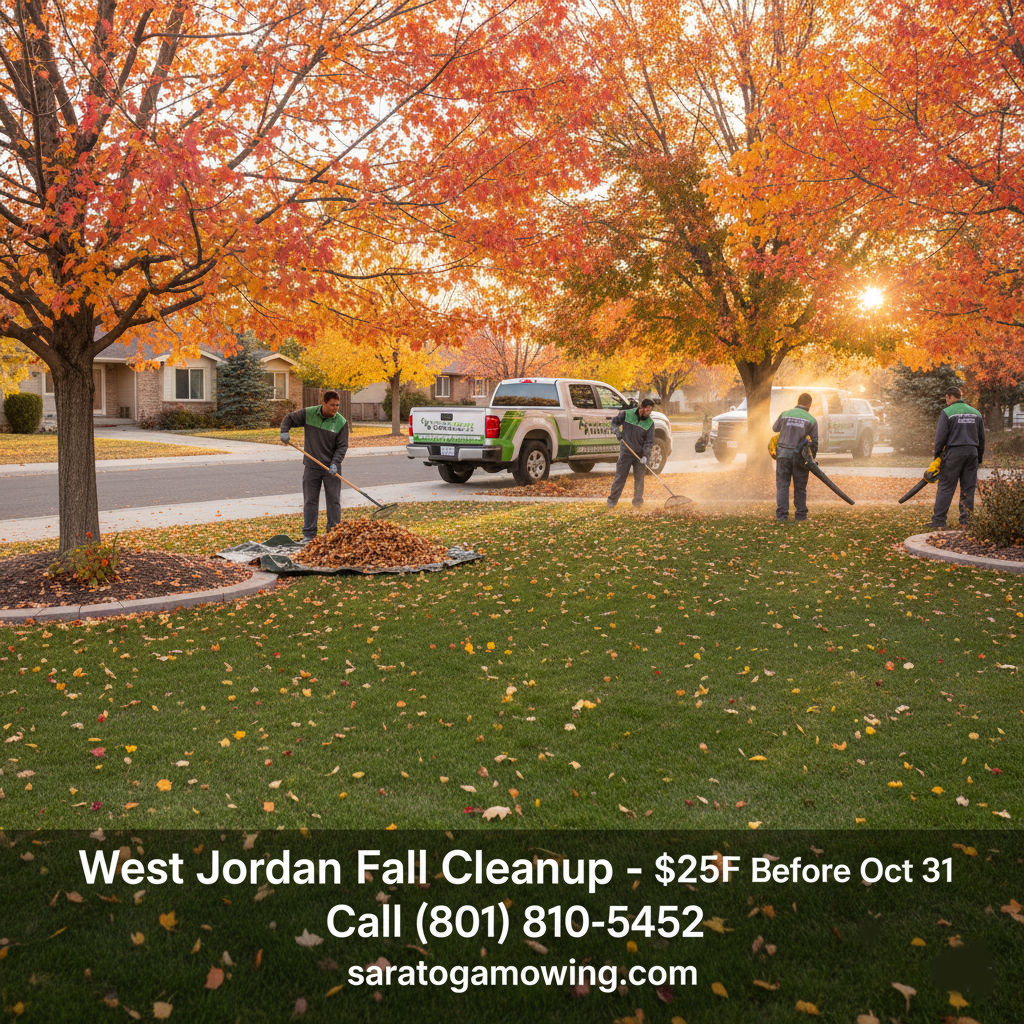
Don’t wait until spring to regret skipping your fall yard work.
A few hours now can prevent months of frustration later.
At Saratoga Mowing, we help West Jordan homeowners protect their lawns from snow mold, pests, and dead patches — all before the first frost. Our Fall Cleanup Services include:
- Leaf removal and lawn edging
- Aeration and overseeding
- Sprinkler blowouts
- Winter fertilizer and pest prevention
- Full-property debris cleanup
Call (801) 810-5452 or visit saratogamowing.com to schedule your West Jordan Fall Cleanup today.
Special Offer: Get $25 OFF any Fall Cleanup service booked before October 31. We’ll handle the work — you’ll enjoy a greener, healthier lawn this spring.
FAQ — Fall Yard Work & Lawn Health in West Jordan, Utah
Q1: When is the best time to do fall yard cleanup in West Jordan?
Aim for late September through mid-October, before consistent frost. The soil is still warm enough for root growth, and the days are cool enough for yard work.
Q2: Can I aerate and fertilize on the same weekend?
Yes. Aerating first improves absorption of nutrients from fertilizer, so pairing them is ideal.
Q3: What happens if I don’t blow out my sprinklers before winter?
Any water left in pipes can freeze, expand, and burst fittings or valves — repairs often cost hundreds of dollars.
Q4: Should I mulch my leaves instead of raking them?
If leaves are light and dry, mulching them with your mower is fine. But thick or wet layers should be removed to prevent mold.
Q5: What is the best winterizing fertilizer for Utah lawns?
Choose one labeled “Winterizer” with high potassium (the last number in N-P-K). It promotes root strength and disease resistance.
Q6: How low should I mow before winter?
Keep grass around 2 to 2.5 inches high — short enough to prevent matting but long enough to protect roots.
Q7: Do I need professional help for yard cleanup?
Not necessarily. Most homeowners handle basic tasks in a weekend. For aeration, irrigation, or large properties, a local West Jordan lawn service can speed up the process.