

Introduction: The Great Utah Leaf Debate
Every fall, as the trees in Saratoga Springs, Utah turn gold and orange, homeowners face a familiar question:
Should you bag your leaves or mulch them into the lawn?
Ask ten neighbors and you’ll get ten different answers. Some swear by mulching for free fertilizer, while others insist bagging is the only way to avoid fungus and snow mold.
The truth is… both methods have their place — but only one is ideal for Utah’s unique fall conditions.
In this post, the lawn pros at Saratoga Mowing reveal the science behind bagging vs. mulching, when to do each, and how to keep your lawn healthy, vibrant, and ready for spring.
Why Fall Leaf Care Matters in Saratoga Springs
Utah lawns don’t get much rest. Between dry summers, high elevation, and freeze-thaw winters, grass in Saratoga Springs goes through intense seasonal stress.
When fall hits, your yard enters a recovery phase — roots strengthen while blades slow growth. That’s when leaf buildup can make or break your lawn’s health.
Fallen leaves affect your yard in three major ways:
- They block sunlight, starving grass of late-season nutrients.
- They trap moisture, creating fungus and mold (especially snow mold).
- They attract pests, providing shelter for grubs, slugs, and spiders.
So yes — what you do with your fall leaves really matters.
The Case for Bagging: Clean, Controlled, and Safe
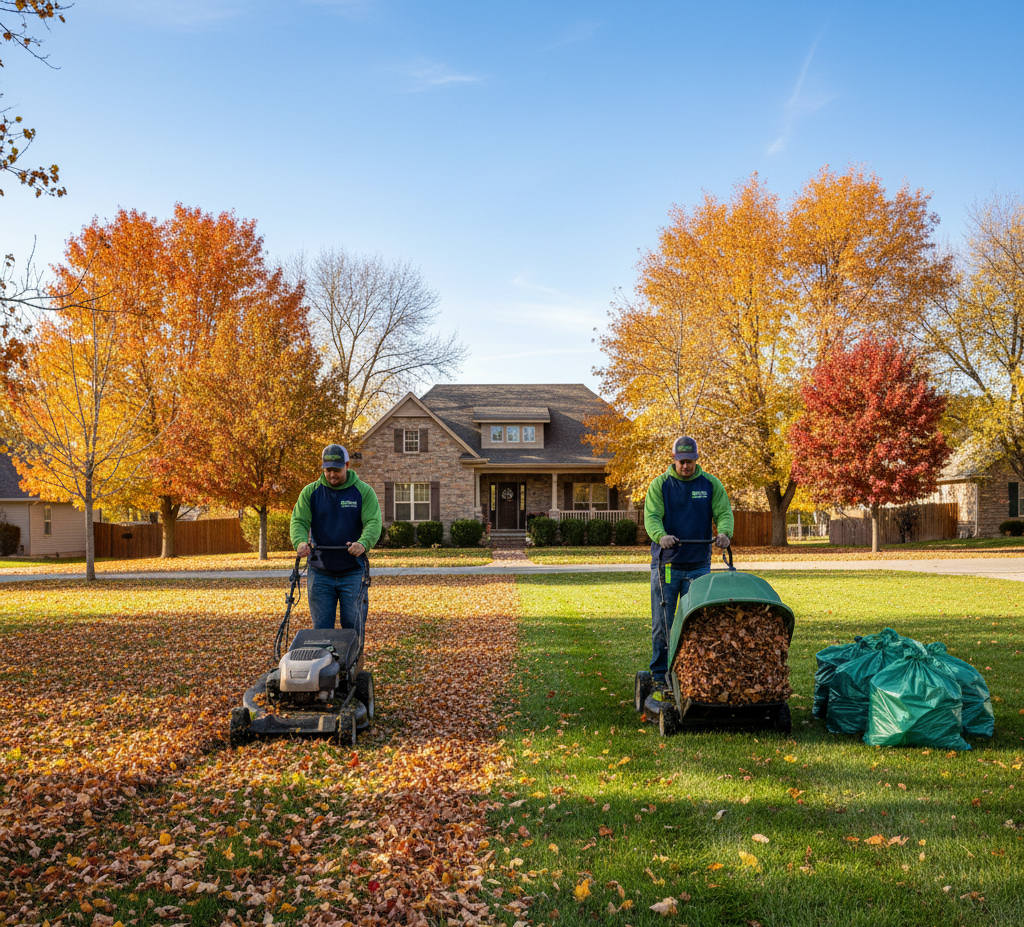
Bagging means collecting and removing leaves completely — either for city composting or direct disposal.
Why Utah homeowners like it:
- Keeps lawns spotless and prevents fungal issues.
- Removes potential pest habitats.
- Improves curb appeal instantly.
Best for:
- Heavy leaf fall (like in mature Saratoga Springs neighborhoods).
- Lawns prone to fungus or poor drainage.
- Homeowners prepping for fall aeration or overseeding.
Pro Tip: Use a mulching mower with a bag attachment. It chops and collects leaves at the same time — saving hours of raking.
Downside:
You lose some of the organic benefits that leaf material can provide if composted properly.
The Case for Mulching: Free Fertilizer (If Done Right)
Mulching involves mowing leaves into fine pieces and leaving them on the lawn to decompose naturally.
Why lawn pros love it:
- Adds nutrients back into the soil (especially nitrogen and carbon).
- Saves time and disposal costs.
- Improves soil texture and moisture retention.
Best for:
- Light to moderate leaf coverage (less than ½ inch thick).
- Well-draining lawns with consistent airflow.
- Homeowners looking for sustainable, eco-friendly solutions.
However, mulching in Utah’s semi-arid climate requires caution. Too many leaves or wet conditions can suffocate grass and invite snow mold — a common issue in Saratoga Springs’ colder microclimates.
What Actually Works Best in Utah’s Climate
Here’s the short answer: A combination of both.
Utah’s fall weather is unpredictable — one week it’s 70°F, the next there’s frost. That means your leaf strategy should adjust with the season.
| Condition | Best Method | Why |
| Light leaf coverage | Mulch | Adds organic matter safely. |
| Heavy or wet leaves | Bag | Prevents mold and matting. |
| Lawn already stressed or patchy | Bag | Allows airflow and reduces fungal risk. |
| New or thin grass | Bag | Protects seedlings from suffocation. |
| Warm, dry early fall | Mulch | Ideal for nutrient recycling. |
| Late fall before snow | Bag | Prepares for clean winter dormancy. |
So instead of choosing one method for the whole season, think of it as a two-part system:
- Mulch early, while temperatures are mild.
- Bag later, once leaves pile up or frost appears.
This hybrid approach gives your lawn the nutrients it needs early and the cleanliness it requires before winter.
Saratoga Springs Reality Check: Utah’s Soil Needs Airflow
One of the biggest lawn challenges in Saratoga Springs is soil compaction. Between clay-heavy ground and irrigation cycles, airflow around grass roots can be limited.
Mulching can help long-term soil health — but not if you’re smothering it. Leaves left too thick block the air your roots need to stay healthy.
That’s why Saratoga Mowing’s fall cleanup teams often bag leaves from heavy accumulation zones (under maples, aspens, and cottonwoods) but mulch lighter areas.
Pro Tip: When in doubt, look at your grass.
- If you can still see 50% of it after mulching, you’re safe.
- If it’s fully buried, it’s time to bag.
Mistakes Utah Homeowners Make During Fall Leaf Cleanup
- Mulching wet leaves — moisture glues them together, creating a suffocating layer.
- Waiting too long — once snow falls, trapped leaves turn into mold incubators.
- Using dull mower blades — they tear rather than shred, leaving clumps.
- Ignoring gutters and flower beds — leaves there trap ice and pests too.
Avoiding these mistakes ensures you get all the benefits of fall cleanup without any of the headaches.
Expert Insight: What Saratoga Mowing Recommends
After years of maintaining Utah County lawns, here’s what Saratoga Mowing recommends:
- Early Fall (September–Mid October): Mulch light, dry leaves to feed your soil naturally.
- Late Fall (Mid October–November): Bag the rest to reduce mold before snow.
- After Cleanup: Aerate and apply a low-nitrogen winterizer fertilizer to strengthen roots.
- Bonus: Schedule a sprinkler blowout to prevent frozen lines while you’re at it.
This approach delivers a clean, healthy lawn with zero risk of disease — and makes your spring green-up nearly effortless.
Get a Perfect Fall Cleanup Without the Guesswork
Whether you prefer bagging, mulching, or a mix of both — the key is timing and technique.
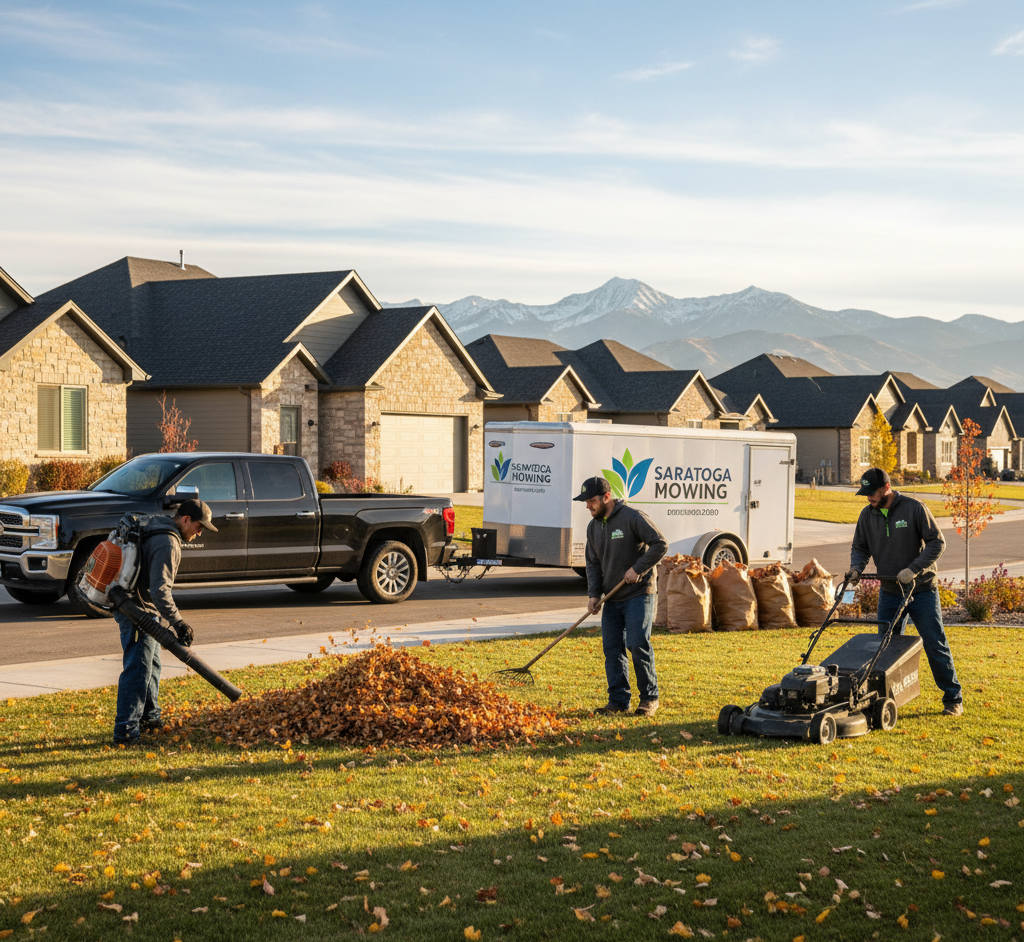
At Saratoga Mowing, we take the guesswork out of fall leaf cleanup for homeowners in Saratoga Springs, Utah. Our experts know when to mulch for nutrients and when to bag for protection — ensuring your lawn looks great now and even better come spring.
- Full-service leaf cleanup (raking, bagging, and hauling)
- Professional-grade mulching and mower blades
- Winter prep and sprinkler blowouts
- Eco-friendly disposal and soil health focus
Call (801) 810-5452 or visit Saratoga Mowing Fall Services to schedule your Fall Leaf Cleanup in Saratoga Springs today.
Limited-Time Offer: Book before October 25 and get $25 OFF your full cleanup package!
FAQ — Leaf Cleanup and Mulching in Utah
Q1: Is it bad to leave leaves on the lawn over winter?
Yes. Thick layers trap moisture, leading to snow mold, dead patches, and pest nesting.
Q2: Can I mulch pine needles or large leaves like maple?
Yes, but shred them finely with multiple mower passes. Large leaves should be reduced to dime-sized pieces.
Q3: How often should I mulch during fall?
Once a week during early fall is usually enough. After heavy storms or wind, you may need to mulch or bag again.
Q4: Should I rake before mulching?
If the leaf layer is more than 1 inch thick, rake lightly first to avoid clumping.
Q5: Can I mix mulched leaves into garden beds?
Absolutely — dry, shredded leaves make excellent organic mulch for shrubs and perennials.
Q6: When should I stop mulching and switch to bagging?
Once overnight temperatures consistently drop below 40°F or when leaves start staying damp overnight.