

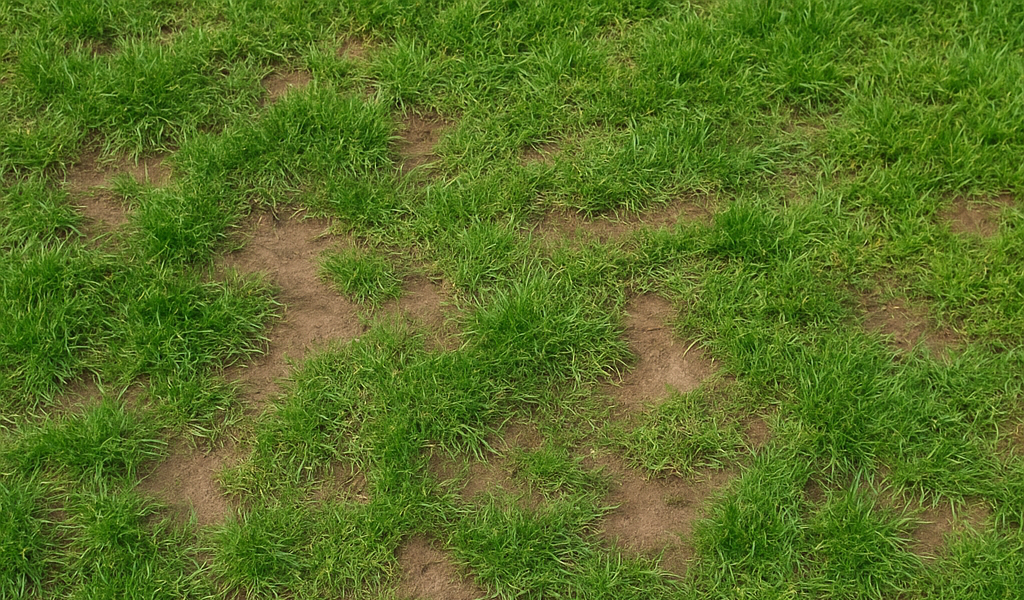
You step outside on a warm summer morning and see that your once-green lawn has turned brown. In Utah, this can happen quickly, leaving you wondering what went wrong. Is your grass dead, just dormant, or maybe diseased? The answer depends on a few things. The good news is that most brown lawns in Utah and Salt Lake Counties can bounce back if you take the right steps right away and don’t wait.
This guide will help you identify the most common causes of brown lawns in Utah, then walk you through how to address each issue step by step.
Understanding Utah’s Summer Climate and Your Lawn
Most of Utah County and Salt Lake County are between 4,300 and 5,000 feet in elevation, so lawns get extra ultraviolet (UV) exposure—the sun’s rays that cause sunburn—along with the heat. These conditions put significant stress on cool-season grasses such as Kentucky bluegrass and tall fescue. Cool-season grasses grow best in mild temperatures but struggle in intense heat.
When grass gets too stressed, it either goes dormant or dies. Figuring out which one is happening is the first step to bringing your lawn back.
Reason #1: Heat Dormancy — Your Lawn Is Sleeping, Not Dead
Cool-season grasses—types that thrive in mild temperatures—can survive drought and heat by going dormant. Dormancy means the grass temporarily stops growing and turns tan or brown, but roots stay alive underground. When it stays above 90°F for a while, and there isn’t much water, the grass sends its energy to the roots and lets the blades die back.
To see if your lawn is dormant, gently pull on the brown grass blades. If they don’t come out easily and the base looks white or a little green, your lawn is just dormant, not dead. Most dormant lawns in Utah recover in two to three weeks with regular watering or cooler weather.
Don’t worry, and avoid soaking the lawn all at once. Start deep-watering again, giving about 1 inch of water per week, split into two or three sessions. Water early in the morning, between 5:00 and 9:00 a.m., to reduce evaporation and fungal growth. Saratoga Mowing lawn care experts can help you set your watering timers to ensure optimal settings. This is key so the grass gets enough water without being flooded or overwatered, which can harm it.
Reason #2: Underwatering and Drought Stress
Drought stress looks like dormancy, but it is more serious. If your lawn goes too long without water, especially during Utah’s hottest months in June, July, and August, the grass can die instead of just going dormant. Signs include grass blades curling, turning grayish-brown, and footprints that stay visible for several seconds after you walk on the lawn.
Check your sprinkler system as soon as possible. Underwatering can occur due to broken sprinkler heads, clogged nozzles, or incorrect controller settings. After watering in the morning, walk around your yard and look for dry spots. Utah lawns need 1.5 to 2 inches of water each week in summer. This means water should reach 1.5 to 2 inches in the soil, not just on the surface. Saratoga Mowing offers sprinkler services to ensure everything is working properly.
Reason #3: Overwatering — Yes, Too Much Can Also Turn Grass Brown
It might seem odd, but overwatering is a common reason for brown, unhealthy lawns in Utah. When the soil stays too wet, grass roots don’t get enough oxygen and can start to rot. The lawn may look brown and soggy, feel spongy when you walk on it, and sometimes smell sour or musty near the ground.
Cut back on watering and let the top inch or two of soil dry out before watering again. Deep-watering means applying water so it soaks into the soil, encouraging roots to grow deeper. Set your sprinkler controller for deep but less frequent watering. If your yard doesn’t drain well, aerating the soil—poking holes in the ground—can help water soak in better. You can request a quote from Saratoga Mowing (a Millburn company) to assist with your sprinkler system and watering schedule.
Reason #4: Lawn Fungal Disease
Several fungal diseases—plant infections caused by fungi—do well in Utah’s summer weather, especially when nights are warm, and lawns are watered in the evening. Common problems include necrotic ring spot, brown patch, and dollar spot. Necrotic ring spot creates brown patches with yellow rings. Brown patch and dollar spot also make uneven brown spots. The patches can be small or several feet wide.
What to do: Water your lawn early in the morning rather than at night, and avoid walking on the affected areas. You can also use a lawn fungicide—a chemical that kills fungus—from a local garden center. For serious cases, you might need a professional to diagnose and treat the problem. Keeping your lawn healthy with the right fertilizer—plant nutrients—and a mowing height that’s right for your lawn, along with aeration, will help prevent fungal diseases in the future. Saratoga Mowing can also assist with lawn fertilizer and weed control treatments.
Reason #5: Grub Damage
White grubs—small, white C-shaped larvae—eat grass roots from mid-summer to early fall in Utah. If you see uneven brown patches in August or September, grubs might be the cause. Try lifting up loose turf—if the roots are missing, check for C-shaped white larvae in the top two inches of soil. If you find five to eight grubs per square foot, it’s time to treat your lawn.
Apply grub control in late June or early July, before the larvae hatch. Preventing grubs is easier than fixing the problem later. Some products can help in late summer if you already have grubs. If your lawn is badly damaged, overseed or replace the sod in the fall. Overstressing the lawn leaves it vulnerable to heat, drought, and disease. In Utah, many homeowners mistakenly cut cool-season grasses to less than 2.5 inches during summer, thinking shorter means less work. The opposite is true. Taller grass blades shade the soil, reduce moisture loss, and encourage deeper root growth. Let us do the hard work for you and get a quote for lawn mowing services today!
Call a Lawn Care Professional if You Need Help
If none of these remedies help after two or three weeks, it may be time to call a lawn care professional. A local company like Saratoga Mowing, which is experienced with Utah soils and grasses, can pinpoint disease, pests, or soil issues for you.
Saratoga Mowing serves Utah County and Salt Lake County, including Saratoga Springs, Eagle Mountain, Lehi, American Fork, Orem, Provo, Sandy, Draper, South Jordan, and more. If your lawn is struggling this summer, don’t wait—contact us today for a free quote or assessment. Let us help your lawn recover and thrive this season.